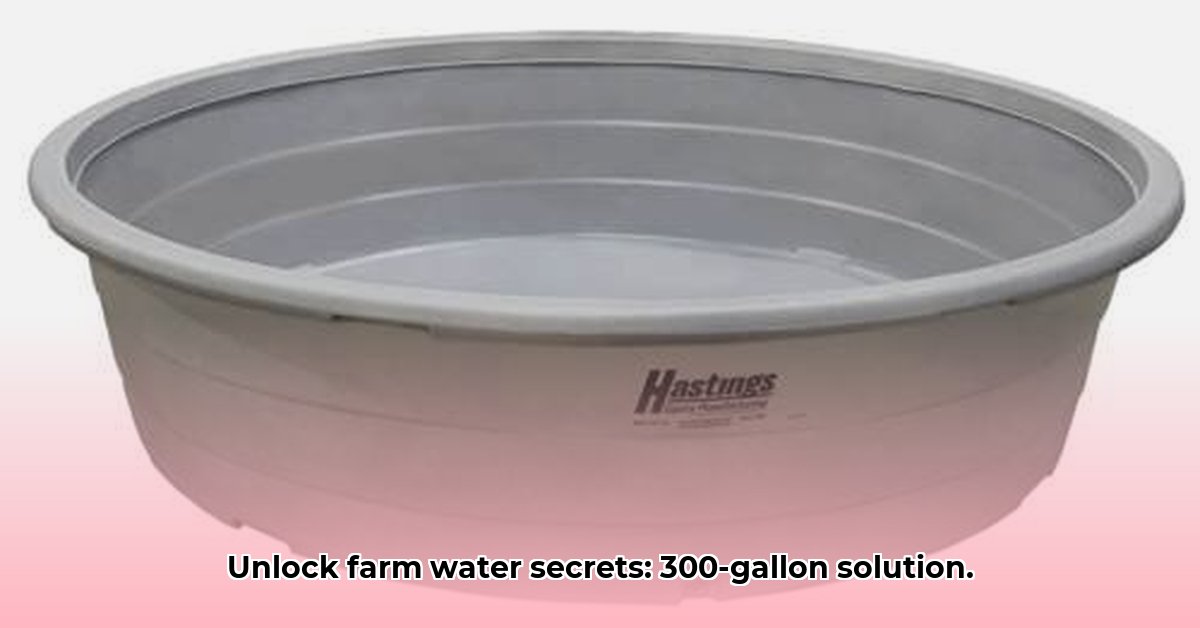
Tractor Supply 300-Gallon Stock Tank: A Comprehensive Guide for Sustainable Agriculture
Water scarcity is a growing concern for farmers worldwide. Efficient water management is no longer a luxury; it's a necessity for sustainable and profitable agriculture. This guide focuses on maximizing your water resources by effectively utilizing a Tractor Supply 300-gallon stock tank. We'll cover everything from selecting the right tank to integrating it into a broader water conservation strategy, ensuring your farm thrives even during periods of drought. For more detailed specs, check out this helpful resource: Tank Specs.
Choosing the Right Tank: Size, Location, and Alternatives
Before purchasing, assess your farm’s specific water needs. Consider your livestock's daily water consumption, irrigation requirements for crops, and potential future expansion. A 300-gallon tank may suffice for smaller operations, but larger farms might require multiple tanks or larger-capacity alternatives.
Location is crucial. Choose a level, stable area with easy access for filling, cleaning, and potential plumbing connections. Ideally, position the tank near a water source to minimize transport distances.
While the Tractor Supply 300-gallon stock tank offers a cost-effective solution, other options exist. Larger tanks offer increased storage but come with higher costs and increased handling complexities. Above-ground cisterns provide significant capacity but require more complex installation. The optimal choice depends on your specific needs and budget. Consider the long-term costs and benefits of each. Do you need the flexibility of smaller tanks for different watering needs or the greater storage of a larger option? How does the cost of each compare with the amount of water they can hold over their lifetime?
Installation and Setup: A Step-by-Step Approach
Proper installation is vital for tank longevity and safety.
Site Preparation: Clear the chosen area of rocks, debris, and vegetation. Level the ground to ensure a stable base; uneven ground can lead to leaks or even tank failure.
Tank Placement: Carefully place the tank on the prepared area, ensuring it’s level using a level tool. Consider using a skid steer or assistance if the tank is heavy.
Plumbing (Optional): If connecting to an irrigation system or pump, use high-quality connectors and sealants to prevent leaks. Consult a plumber if needed. Always turn off water sources before making connections.
Leak Testing: Slowly fill the tank with water to detect leaks. Inspect carefully and address any issues promptly. A small leak can cause significant problems over time.
Securing the Tank: Depending on your location's weather patterns, anchoring the tank may be necessary. Use straps or other methods to secure it to a stable structure and prevent movement or tipping due to wind or heavy rain. Don’t underestimate the power of wind.
Maintenance and Longevity: Extending the Lifespan of Your Tank
Regular maintenance prevents issues and extends the tank's lifespan.
Cleaning: Periodically clean the tank to remove sediment, algae, and other buildup. Use a garden hose and a stiff brush; the frequency depends on your local climate and water source.
Inspection: Regularly inspect the tank for cracks, rust, or damage. Address minor issues immediately to prevent escalation.
Winterization (If Applicable): In cold climates, protect your tank from freezing by draining it completely or using an appropriate antifreeze solution (check compatibility with the tank material). Freezing water can cause significant damage.
Integrating the Tank into a Broader Water Management Strategy
The 300-gallon tank is just one component of a comprehensive water management plan.
Rainwater Harvesting: Collect rainwater using gutters and downspouts to supplement your water supply and reduce reliance on municipal water. This significantly lowers water costs and reduces your environmental impact.
Efficient Irrigation: Utilize efficient irrigation methods such as drip irrigation or soaker hoses to minimize water waste and maximize crop yields. Drip irrigation can significantly reduce water waste compared to traditional methods.
By combining the tank with rainwater harvesting and efficient irrigation, you create a robust and sustainable water management system for your farm. How could these practices help you further reduce your overall water costs while positively impacting the environment?
Comparing the Tractor Supply 300-Gallon Tank to Alternatives: A Cost-Benefit Analysis
The Tractor Supply 300-gallon stock tank provides an excellent balance of cost and capacity for many small to medium-sized farms. However, before choosing this solution, it's essential to weigh the pros and cons against other options available. Consider the long-term investment and maintenance costs associated with each; the ideal choice depends on your farm's unique needs and available resources. Exploring different options is crucial before making a final decision.
Key Takeaways:
- Efficient water management is crucial for sustainable farming practices.
- The Tractor Supply 300-gallon stock tank offers a cost-effective water storage solution.
- Integrating the tank into a broader water management strategy maximizes its benefits.
This guide empowers you to utilize your Tractor Supply 300-gallon stock tank effectively, contributing to a more sustainable and productive farm. Remember that ongoing learning and adaptation are vital to optimize your water management practices over time.